Raku is an exciting and instinctive rapid-firing process, an ancient Japanese pottery style in which ceramic vessels are rapidly fired. Taken from the kiln, glowing red hot, the pots are placed into organic matter and starved of oxygen to create vibrant colors and
surface effects with the glaze and clay.
In the mid-20th century, the process was modernized and moved away from traditional wood-fired kilns to gas-fired kilns. This is a highly unpredictable process that is always enthralling and filled with fun.
With a mixture of nervous excitement and thrilling anticipation, the rewards can be great, producing spectacular and unique results with every piece. It is impossible for even a seasoned Raku potter to predict a result or be a perfectionist!
Visiting artist Christian Casas will guide you through the process of glazing and Raku firing up to 3 pieces or a total amount of 125 cubic inches. We kindly ask that students not bring long and flat and round pieces to maximize efficiency and firing capacity of the kilns. If space and time allows, additional pieces may be fired. Students of all abilities from complete beginners to experienced potters are very welcome!
From 9-11:30am we will focus on the history of raku and exploring glazing techniques with provided glazes. At 11:30, we will clean up in the studio and have the rest of class outside. There will be small breaks between firings, and students are welcome to bring lunch or snacks. Alley cat will also be open for open studio.
Each firing can take up to an hour, depending hugely on the weather conditions, affected by wind, humidity and temperature. The risk of thermal shock adds to the intensity; this means that pieces need to be carefully thought through, walls must not be too thin, and joints can add points of weakness. Flat items such as trinket dishes or tiles are notorious for cracking!
Using glazes, resists, and oxides can give further interest to a finished vessel. Burnishing and carbonizing non-colored areas add contrast and texture.
Too long, didn’t read:
Bring small bisqueware, up to 125 cubic inches worth. This is a 5 hour workshop with some breaks so bring snacks or lunch. Half will be inside and half will be outside.
Raku is an exciting and instinctive rapid-firing process, an ancient Japanese pottery style in which ceramic vessels are rapidly fired. Taken from the kiln, glowing red hot, the pots are placed into organic matter and starved of oxygen to create vibrant colors and
surface effects with the glaze and clay.
In the mid-20th century, the process was modernized and moved away from traditional wood-fired kilns to gas-fired kilns. This is a highly unpredictable process that is always enthralling and filled with fun.
With a mixture of nervous excitement and thrilling anticipation, the rewards can be great, producing spectacular and unique results with every piece. It is impossible for even a seasoned Raku potter to predict a result or be a perfectionist!
Visiting artist Christian Casas will guide you through the process of glazing and Raku firing up to 3 pieces or a total amount of 125 cubic inches. We kindly ask that students not bring long and flat and round pieces to maximize efficiency and firing capacity of the kilns. If space and time allows, additional pieces may be fired. Students of all abilities from complete beginners to experienced potters are very welcome!
From 9-11:30am we will focus on the history of raku and exploring glazing techniques with provided glazes. At 11:30, we will clean up in the studio and have the rest of class outside. There will be small breaks between firings, and students are welcome to bring lunch or snacks. Alley cat will also be open for open studio.
Each firing can take up to an hour, depending hugely on the weather conditions, affected by wind, humidity and temperature. The risk of thermal shock adds to the intensity; this means that pieces need to be carefully thought through, walls must not be too thin, and joints can add points of weakness. Flat items such as trinket dishes or tiles are notorious for cracking!
Using glazes, resists, and oxides can give further interest to a finished vessel. Burnishing and carbonizing non-colored areas add contrast and texture.
Too long, didn’t read:
Bring small bisqueware, up to 125 cubic inches worth. This is a 5 hour workshop with some breaks so bring snacks or lunch. Half will be inside and half will be outside.


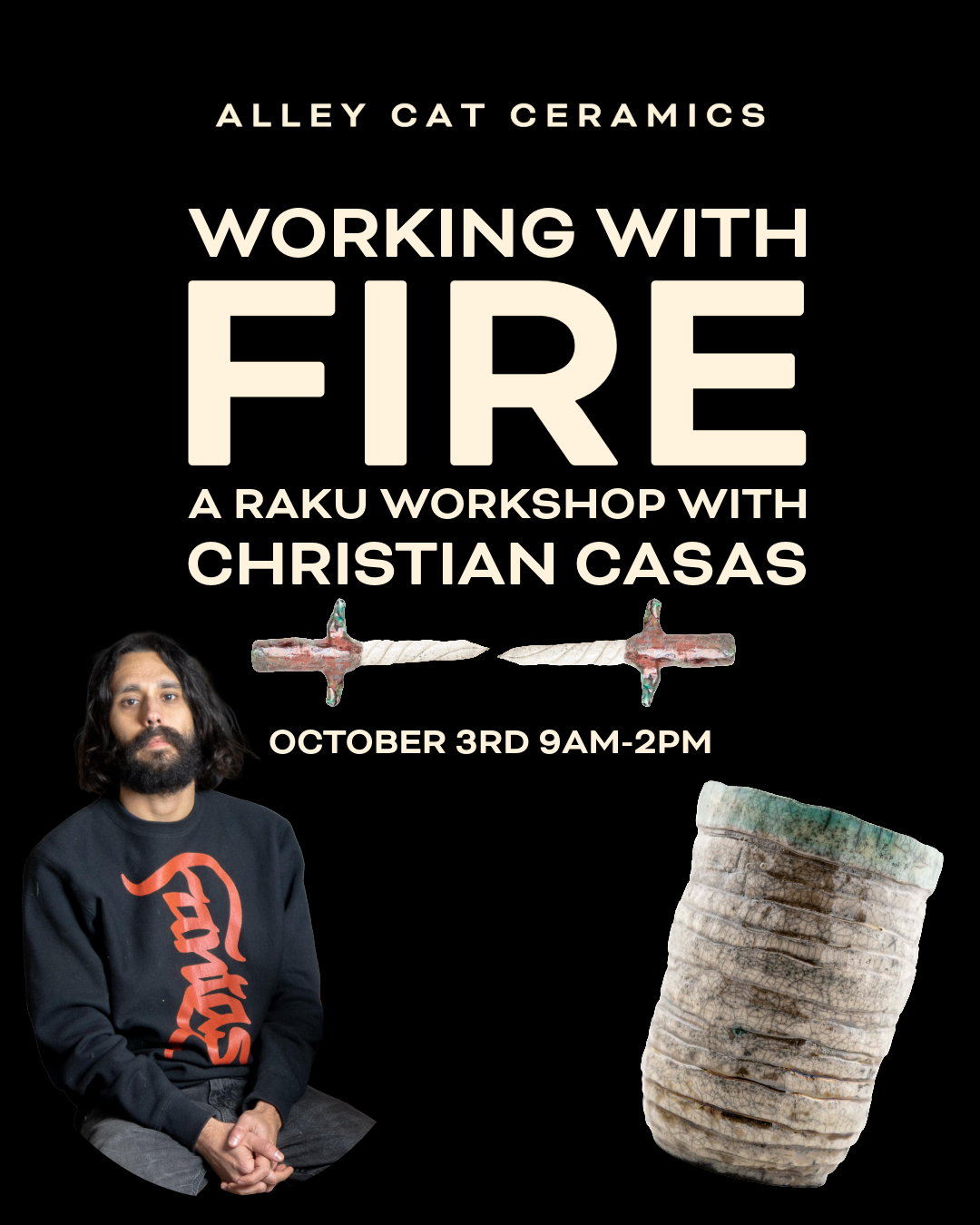 Image 1 of 6
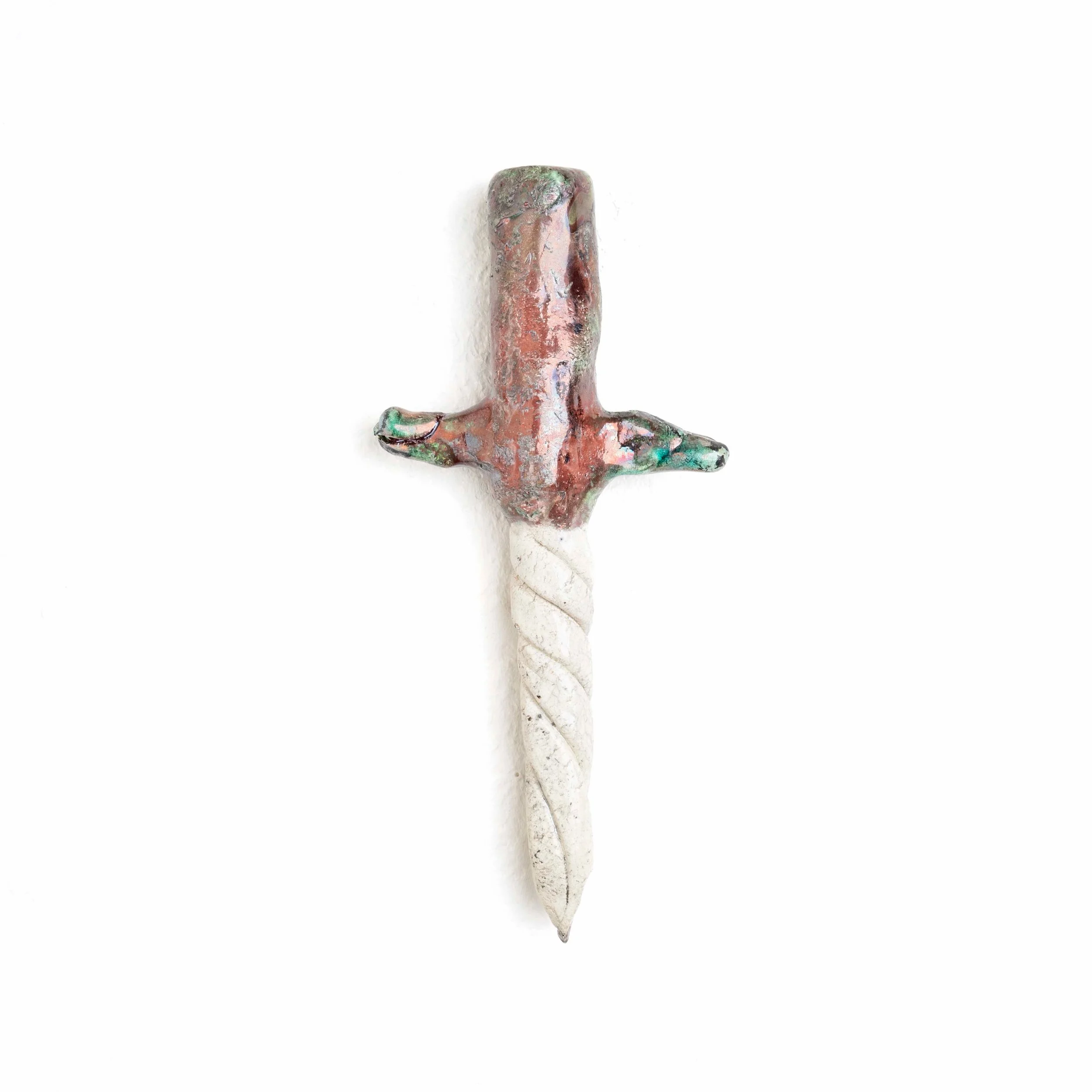 Image 2 of 6
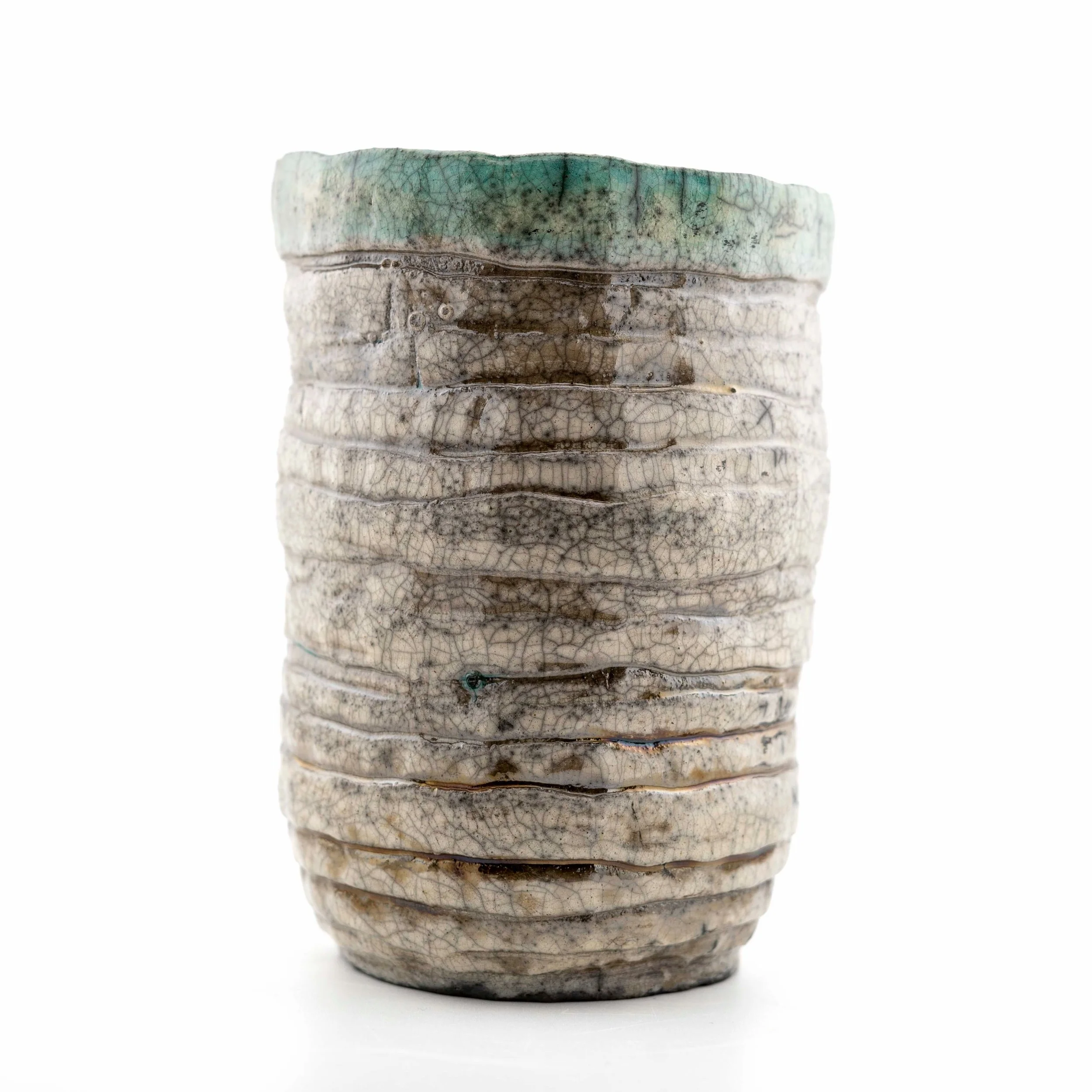 Image 3 of 6
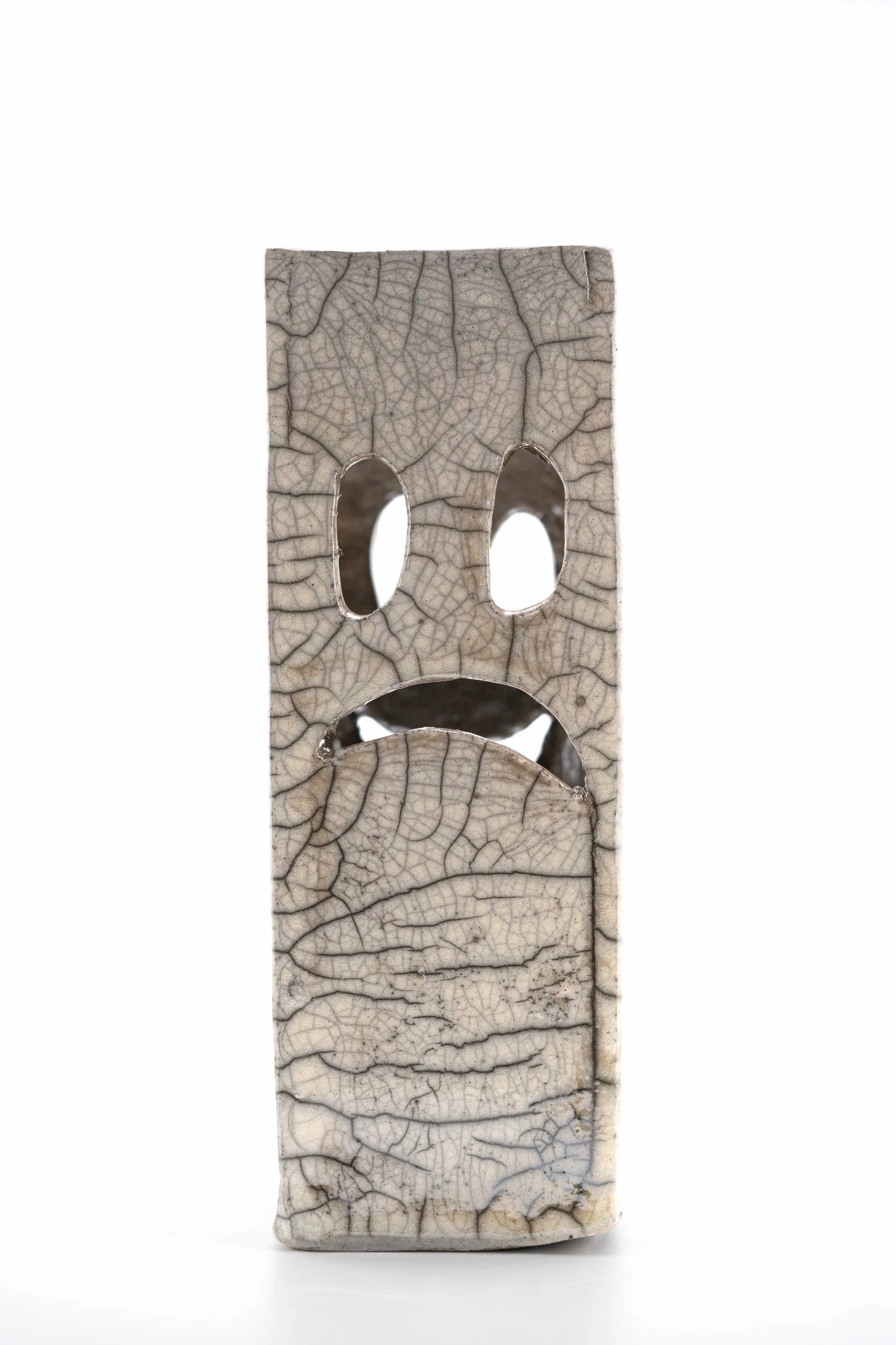 Image 4 of 6
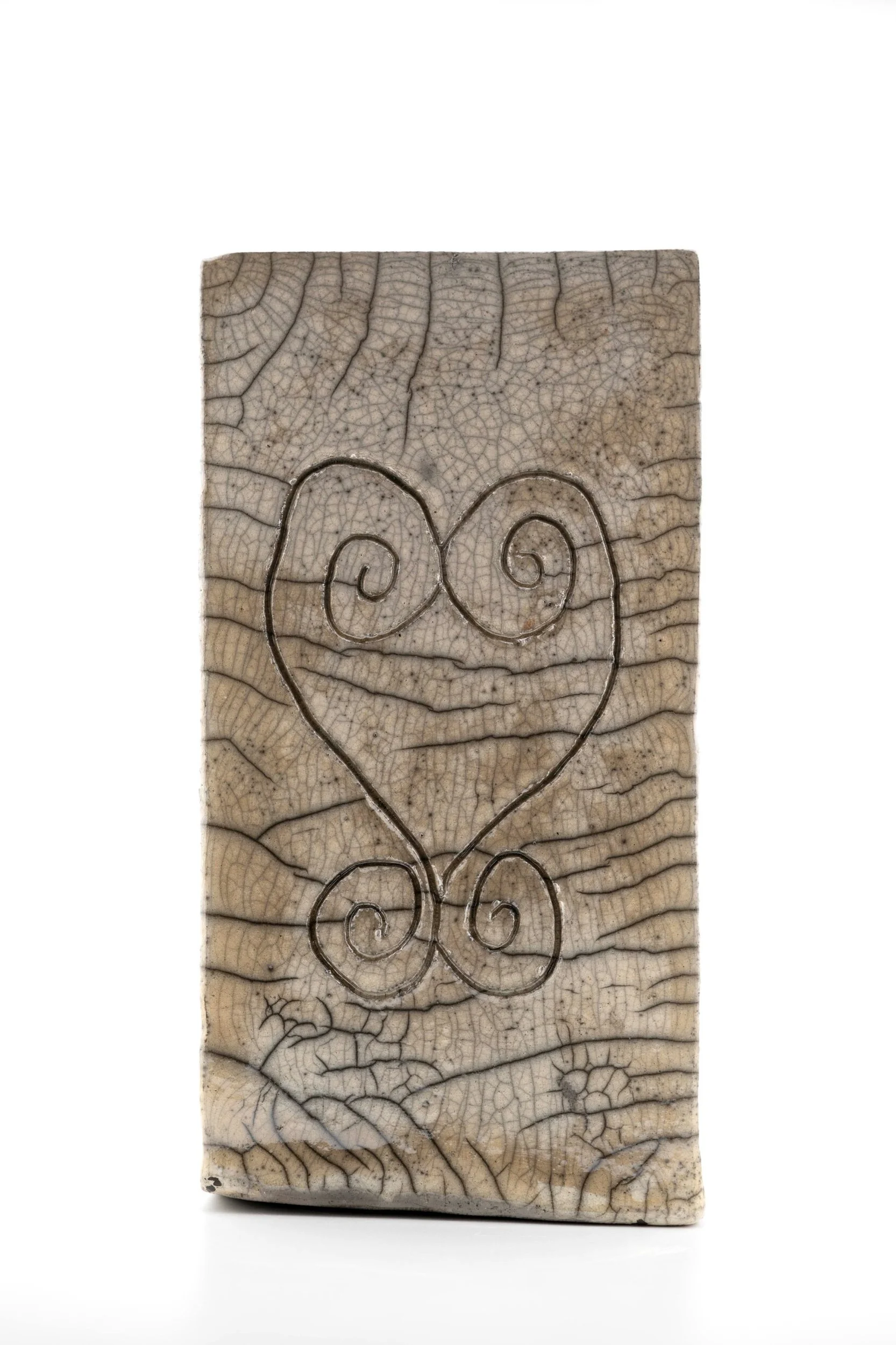 Image 5 of 6
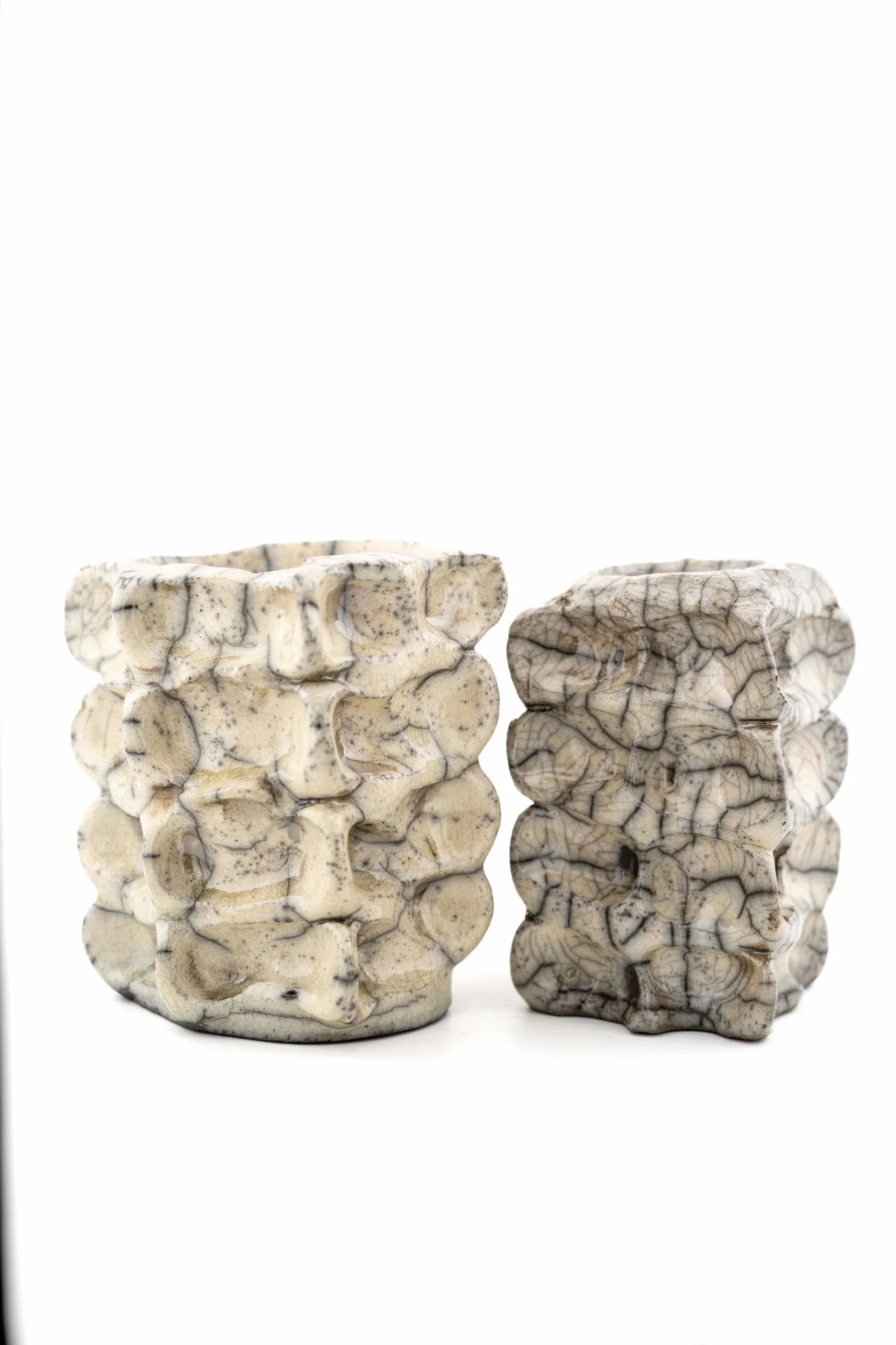 Image 6 of 6